Projects & Papers
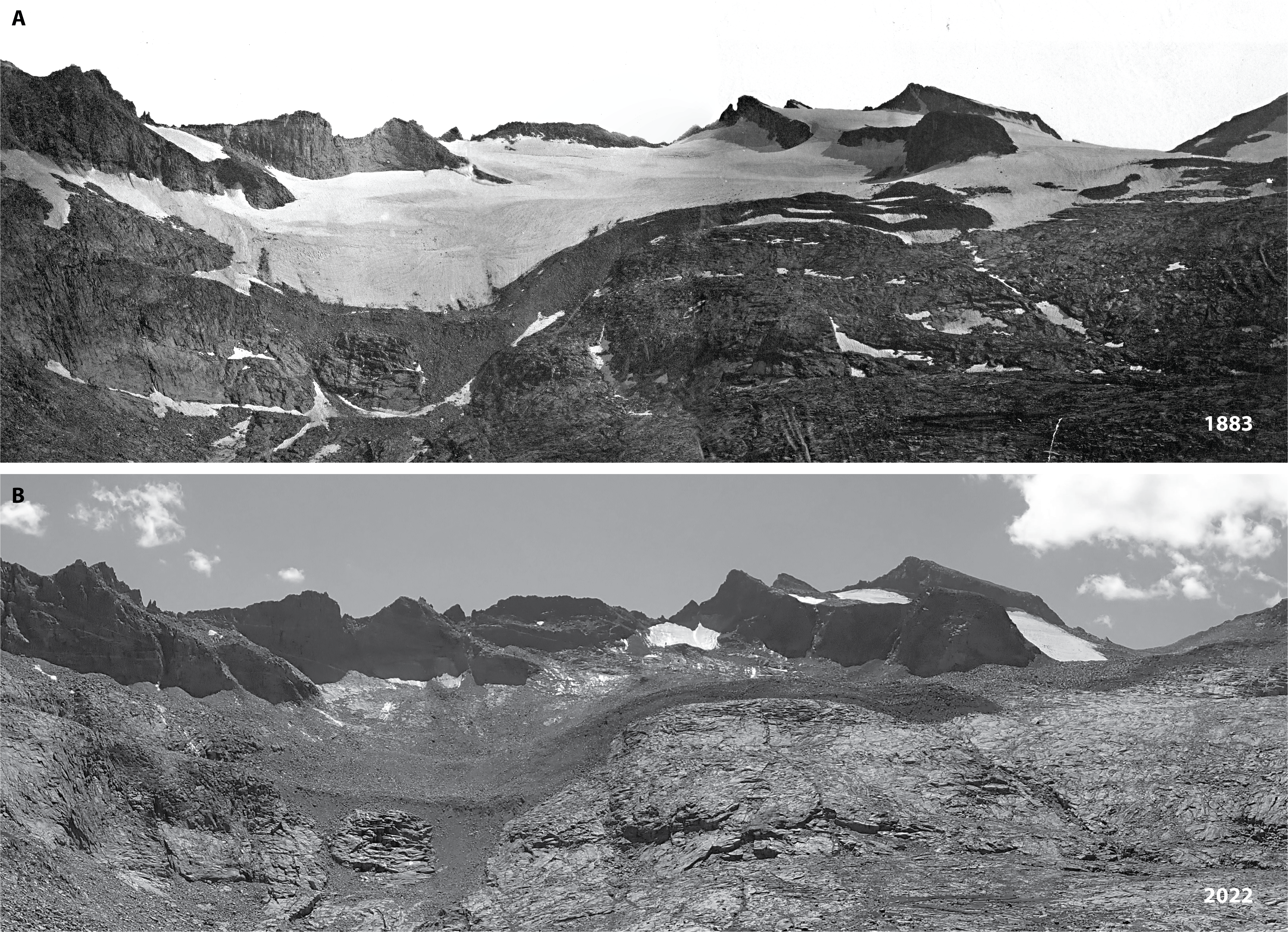
Unprecedented glacier retreat relative to the last 11,000 years of the Holocene
- Glaciers in California's Sierra Nevada and the tropical Andes have persisted throughout the Holocene — contrary to prior assumptions that they were largely absent.
- We use paired in situ ¹⁴C-¹⁰Be measurements on bedrock exposed by retreating ice to directly constrain past glacier positions.
- Modern retreat in both regions has crossed a threshold with no analog in the past 11,000 years.
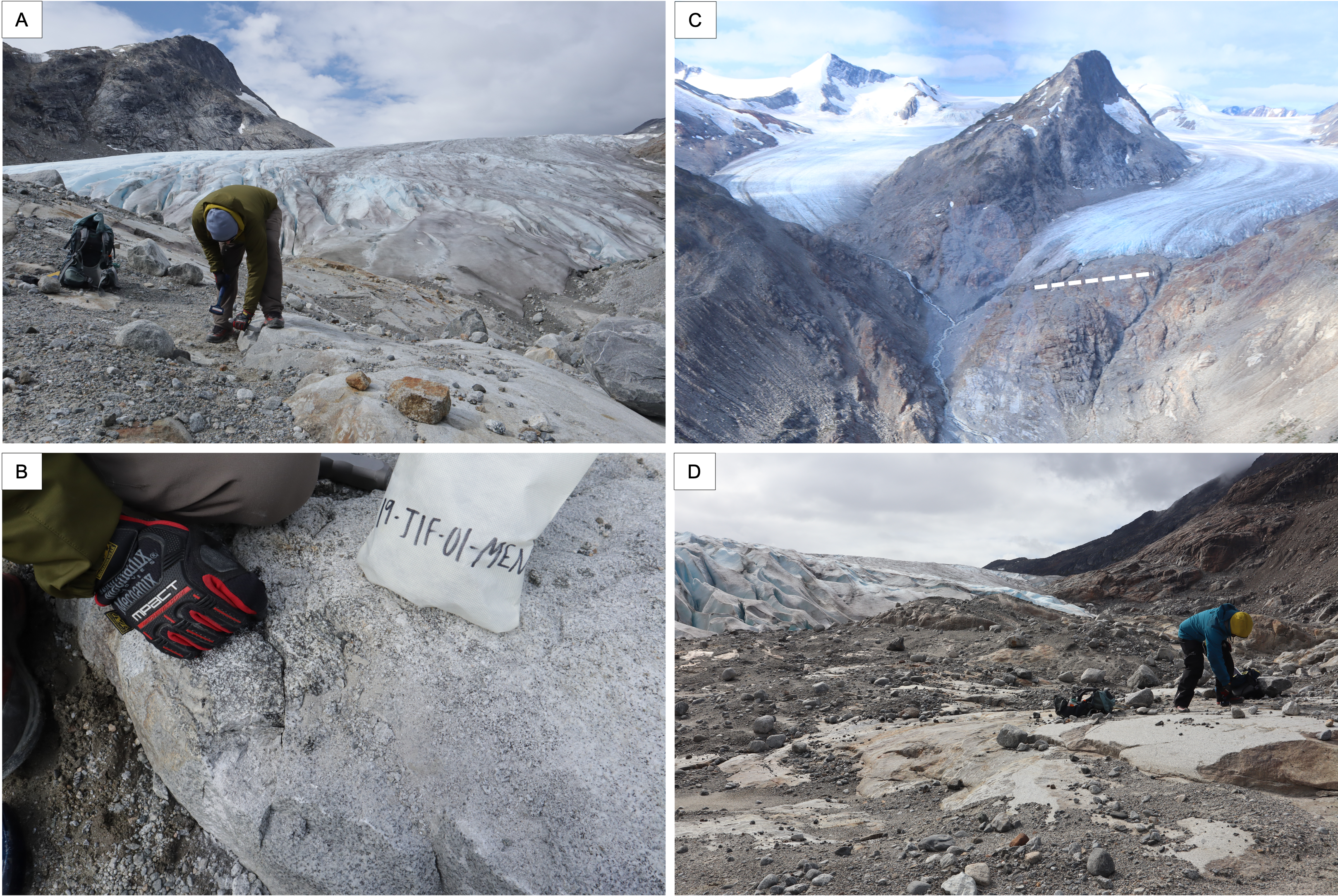
Reconstructing Holocene glacier length variations to contextualize modern retreat
- Glaciers across the Americas advanced past their modern margins thousands of years apart, suggesting they are more out of sync today than at any other point in the Holocene.
- Non-uniform modern retreat, rather than a single shared climate signal, drives this asynchronous behavior.
- Individual glacier chronologies reveal the natural range of variability against which modern change can be measured.
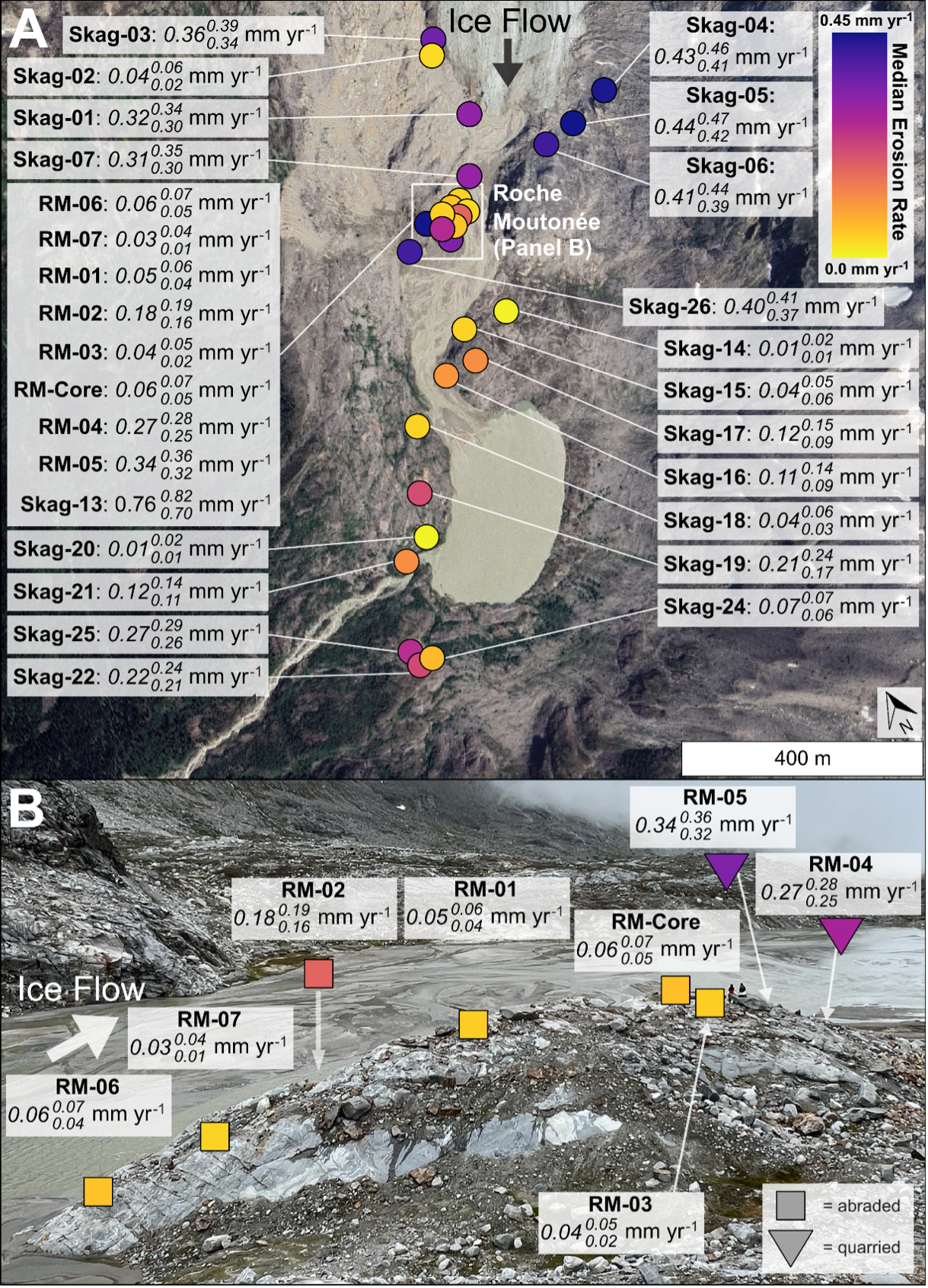
Subglacial erosion rates of alpine glaciers are low and spatially variable
- Alpine glaciers erode bedrock more slowly than commonly assumed.
- Erosion rates vary substantially across a single glacier's bed, challenging the assumption of spatially uniform erosion.
- Low, variable erosion rates have significant implications for modeling landscape evolution over glacial cycles.
Brooks, Jones et al. — in review at PNAS
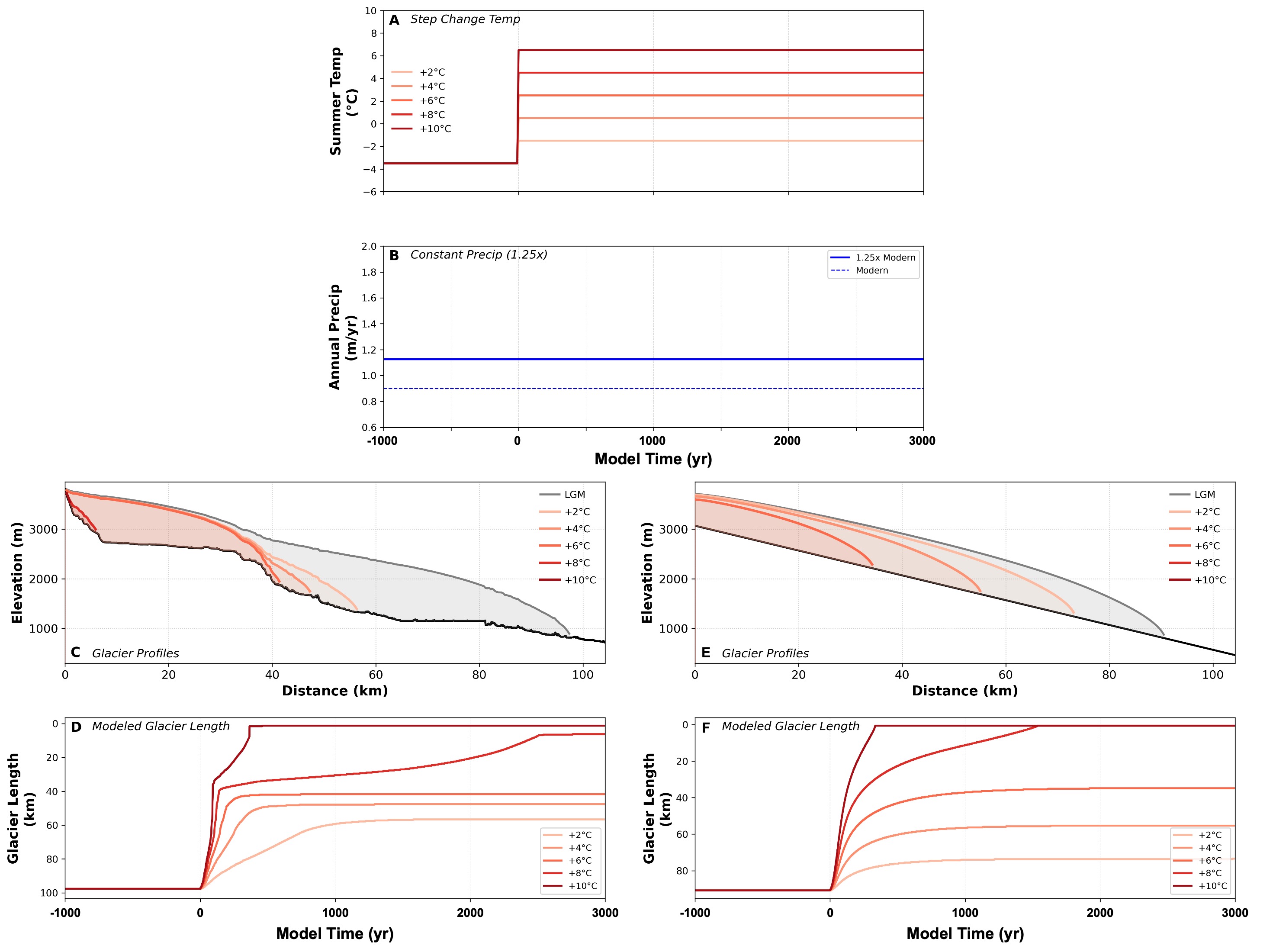
Rapid deglaciation of California's Sierra Nevada: climate forcing, bed geometry, and glacier dynamics
- Climate forcing alone cannot fully account for the rapid retreat of Sierra Nevada glaciers after the Last Glacial Maximum.
- Bed geometry — particularly bed slope — significantly accelerates or decelerates retreat in response to the same climate forcing.
- A one-dimensional flowline model paired with 26 new ¹⁰Be exposure ages allows us to simulate glacier response and test deglacial scenarios against the paleoclimate record.
Jones et al. — in prep